
Upgrading pipework in an occupied building means protecting more than the installation programme. Heating may need to remain available, production areas may still be operating, and sensitive equipment needs protection from disruption. Work involving flames, heat or sparks adds another consideration to that planning.
Press fit pipework can reduce the need for welding or soldering at suitable connections. It offers a practical way to limit hot works during commercial and industrial upgrades, provided the materials, fittings and installation method match the system. The strongest approach starts with understanding the existing services, not simply choosing a different joint.
How press fit connections reduce hot works

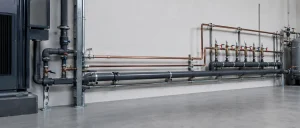
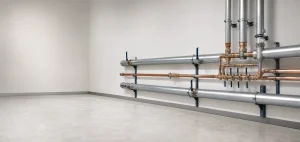
A press fit connection is formed by a powered pressing tool and the correct jaw or ring for the fitting. The tool compresses the fitting around the prepared pipe, creating a permanent mechanical joint. Many systems use a sealing element within the fitting, selected for the intended service.
Unlike welding or soldering, the pressing operation does not need a flame or heat to make the joint. Where press fit is suitable, this removes a source of ignition from that part of the installation and can reduce the associated hot works controls.
That distinction matters in occupied premises, where welding may require protection of nearby materials, controlled access and fire watch arrangements under the site’s permit system. Reducing those activities can make coordination with building users more straightforward.
However, a press fit upgrade is not automatically free from hot works. Removing existing pipework or preparing a connection may still involve equipment that produces sparks or heat. DSJ Pipework’s press fit pipework installation can form part of a wider plan that considers the whole work sequence, including removal and final connections.
Where press fit can help in occupied buildings
Press fit can be useful when extending heating circuits, altering cooling distribution or replacing suitable pipework within plant rooms and service areas. Its value is particularly clear where surrounding operations make limiting ignition sources a priority.
For example, a heating alteration may involve installing a new branch while keeping unaffected circuits available. Much of the new run may be assembled before an agreed shutdown, leaving the final connection, testing and return to service within the planned access window.
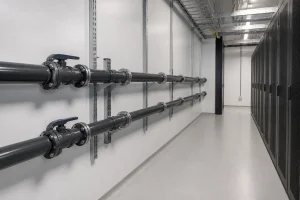
In a data room cooling upgrade, avoiding flame at suitable joints is helpful, but continuity and leak prevention remain central. The plan must also address cooling capacity during the works, protection of equipment and the consequences of an unexpected loss of service.
- Occupied commercial areas: coordinate access, noise and service interruptions with building users.
- Factory and service areas: assess nearby processes, stored materials and operational restrictions.
- Plant rooms: check working space, existing services and access for pressing tools.
Press fit supports these arrangements; it does not replace them. The practical benefit comes from matching the joining method to the working environment.
Check system suitability before choosing the fittings

Press fit is a joining method, not a universal specification. Heating water, chilled water and process fluids can place different demands on pipework. A fitting suitable for one application may not be approved for another.
The contractor should establish operating pressure, temperature, fluid composition and any cleaning or treatment chemicals before selecting a system. For cooling circuits containing glycol, compatibility must include the intended concentration and operating conditions. Sealing elements need particular attention because their suitability depends on the service.
The existing installation also needs assessment. Pipe material, dimensions, condition and corrosion can affect how a new section should connect. Different materials may require approved transition fittings and consideration of corrosion risks.
- Confirm that pipes, fittings and seals are approved for the application.
- Use the specified pressing profile and compatible tooling.
- Check supports, thermal movement and any vibration from connected equipment.
- Allow space to make, inspect and maintain the installation.
Some duties or connection details are better suited to welding. Understanding the role of TIG and MMA welding in industrial pipework helps explain why a carefully designed upgrade may combine welded sections with press fit connections rather than rely on one method throughout.
Plan the shutdown around the whole installation
The pressing operation is only one part of an upgrade. Surveying, isolation, draining, removal, installation, testing and recommissioning all influence when the system can return to service.
Before work starts, establish which services the proposed isolation actually affects. Existing drawings are useful, but they should be checked against the installation. A valve shown on a drawing may not provide an effective isolation, and shared circuits can serve areas beyond the immediate work zone.
A practical plan should answer these questions:
- Which systems must remain available, and is temporary provision needed?
- How will the section be safely isolated, drained and confirmed ready for work?
- What pipework can be prepared before the shutdown?
- Which activities still require permits or additional protection?
- What must be checked before the service is restored?
Agree responsibilities with facilities staff, production teams and other contractors. Press fit connections must not be treated as a way to work on live or pressurised services. Experienced commercial and industrial pipework contractors can help coordinate the installation sequence with the site’s access arrangements and operational needs.
Installation quality and testing still determine the result

Removing heat from the joining process does not remove the need for careful workmanship. Pipe ends must be cut and prepared in accordance with the system manufacturer’s instructions. Burrs, contamination or damaged seals can compromise a connection.
Insertion depth should be marked and checked, and the correct pressing jaw or ring must engage the fitting properly. Restricted access deserves attention during the survey, because a connection that fits within the available space may still lack clearance for the tool.
Suitable tool maintenance and a clear inspection process help ensure that every required connection is pressed. Where fittings include a feature intended to reveal an unpressed joint during testing, that feature is an additional safeguard, not a substitute for checking the work.
The completed section needs an appropriate test procedure, agreed for the system and carried out safely. Testing should follow the applicable specification and manufacturer guidance, with results recorded. Flushing, water treatment, insulation and controls checks may also be needed before handover.
On cooling systems, restoring insulation and vapour control is particularly important to limit condensation. The upgrade is complete when the system has been checked and returned to its intended operation, not simply when the final joint is pressed.
- Press fit connections can reduce welding and soldering at suitable joints, helping limit hot works.
- Removal and preparation activities still need assessment for heat, sparks and other hazards.
- Materials, seals, operating conditions and tooling must suit the specified system.
- Safe isolation, careful installation and recorded testing remain essential.
Frequently asked questions
Does press fit pipework remove the need for a hot works permit?
Not automatically. Pressing a suitable joint does not require flame or heat, but other tasks may generate sparks or heat. Permit requirements depend on the complete scope of work and the site’s procedures.
Can press fit connect to existing welded pipework?
Often, using an approved transition arrangement. The contractor needs to confirm the existing material, dimensions, condition and service requirements before specifying the connection. Existing pipe should not be assumed suitable for direct pressing.
Is press fit suitable for chilled water systems?
Suitable systems are available, but selection must account for pressure, temperature, fluid treatment and seal compatibility. Insulation and vapour control also need careful reinstatement to manage condensation.
Will the building need to close during installation?
Not necessarily. Phased work and planned isolations may allow unaffected areas to remain operational. The answer depends on the services involved, available isolation points and whether essential heating or cooling needs temporary support.
Plan your next pipework upgrade
If you are upgrading heating, cooling or industrial pipework in an occupied space, talk to DSJ Pipework about the existing system and your operating requirements. We can help assess where press fit connections suit the work and how to plan the installation.