
Coded welders are key to industrial pipework projects, making sure pipe systems are not only sound but also meet safety and quality standards. Where pipes are exposed to high pressure, extreme temperatures and hazardous materials the importance of precise welding cannot be overstated.
Coded welders have specialist qualifications to prove they can weld to industry standards, so are essential for critical projects like oil refineries, chemical plants and power stations.
These professionals work to tight tolerances, any defects in their work can mean safety risks or project failure. By using coded welders industrial projects can reduce the risk of leaks, explosions and costly repairs.
Their expertise ensures pipework systems are durable, reliable and compliant to national and international regulations.
What Is a Coded Welder?
A coded welder is a person who has passed a practical exam in a specific welding process, position and material and achieved a certificate that is industry-recognised. Unlike general welders, coded welders have been tested to a high standard, BS EN ISO 9606-1 or ASME IX.
These certificates prove the welder has mastered a particular welding technique and can apply that skill in the demanding conditions of an industrial environment.
The test involves welders being judged on producing joints with no defects and able to withstand various stresses. The welds are visually inspected and non-destructively tested with X-rays or ultrasonic testing.
Coded welders are therefore the most skilled and respected welders in the industry, the level of expertise required to ensure safety and quality in pipework projects.
Welding processes used in industrial pipework
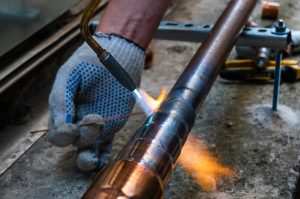
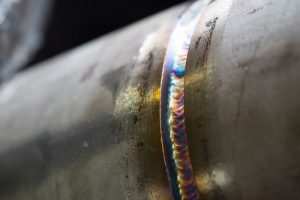
Industrial pipework requires different welding processes depending on the material and the project specifications. Some of the most common welding processes are Tungsten Inert Gas (TIG), Metal Inert Gas (MIG) and Manual Metal Arc (MMA) welding. Each has its advantages. TIG is very precise so is ideal for stainless steel pipework, MMA is often used for thicker materials in more demanding conditions.
These welding processes are critical to the safe installation of industrial pipework systems that carry materials like gas, water or chemicals. Coded welders are trained to select the right welding process for the material and the system operating conditions so the pipes will perform as expected over the long term.
Their technical expertise ensures every joint is secure and can withstand industrial applications.
Safety and quality in high-pressure environments
Industrial environments like power stations, chemical plants and oil refineries operate in extreme conditions. In these environments, the pipework is under high pressure, heat and potentially corrosive materials.
Coded welders are critical in these environments as they ensure the pipework is structurally sound, preventing catastrophic failures that could mean serious safety risks. Welding defects like cracks or porosity can weaken pipe joints and cause leaks, explosions or other accidents.
By using coded welders project managers can ensure the welding meets the highest standards of safety and quality. They use non-destructive testing to verify their welds are defect-free and can withstand operational stresses.
This attention to detail extends the life of industrial pipe systems and minimises the risk of costly downtime due to pipe failures.
Meeting legal and regulatory requirements
Industrial pipework projects must comply with many legal and regulatory standards, many of which are for worker and environmental protection. For example, pressure systems regulations require all pipework to be installed and maintained so it can safely withstand the pressures it will be subjected to.
Coded welders play a critical role in ensuring these systems are built to these regulations as their certificates prove the welds meet the specifications.
By meeting these standards coded welders help industrial operators avoid fines, shutdowns or other legal consequences. Their work is inspected and audited and the use of certified welders is critical to prove the project has met all the regulatory requirements.
This ensures the smooth operation of the industrial facility and protects the company from potential legal liabilities.
Why use coded welders in your projects
One of the main benefits of using coded welders is they can guarantee the quality and safety of the welds in your project. This reduces the risk of accidents which can mean big financial losses and downtime.
In high-pressure environments, even the smallest welding error can be catastrophic but coded welders are trained to avoid these mistakes so the pipework can operate efficiently and safely long term.
Plus using coded welders can save costs in the long run. While hiring certified professionals may seem more expensive up front, their expertise prevents future problems, and reduces the need for repairs and unplanned maintenance.
This extends the life of the pipework and ensures the project is completed on time and budget with fewer surprises.
Conclusion
Coded welders are essential for any industrial pipework project. Their skills and certifications ensure every weld is to the highest standard, the safety and durability industrial environments require.
Whether you’re building a new installation or maintaining an existing system, using coded welders is a critical part of your project’s success.
By putting quality and safety first you can avoid delays, legal problems and accidents all of which can affect your operation.
Using coded welders is not just about meeting the regulations it’s about your project running smoothly and efficiently and protecting your business and its future.