Process cooling plays a pivotal role across a wide range of industries, from manufacturing and data centres to food production and chemical processing.
It ensures that equipment remains within safe operating temperatures, enhances efficiency, and prevents costly breakdowns.
At the heart of any effective cooling system lies the pipework – the critical infrastructure that enables coolant to flow smoothly and reliably throughout the system.
Designing pipework for process cooling is far more than just connecting A to B. A well-designed system maximises energy efficiency, prolongs equipment lifespan, and reduces the likelihood of safety incidents.
This blog explores the essential considerations for designing efficient, reliable, and compliant pipework in process cooling applications.
Understanding the Role of Pipework in Process Cooling
Pipework in process cooling systems is responsible for transporting cooling fluids—such as chilled water, glycol mixtures, or refrigerants—from chillers to the machinery or process zones and back again.
The speed, temperature, and volume of this flow must be precisely controlled to maintain stable conditions and avoid overheating or thermal shock.
When designed poorly, pipework can cause pressure drops, bottlenecks, or even system failures. Conversely, a well-planned layout ensures the cooling process is consistent and effective.
Understanding how pipework influences overall system behaviour is crucial to creating a solution that balances performance with energy use.
Choosing the Right Pipe Materials
Selecting the right material for your cooling system pipework depends on several factors, including the type of coolant, temperature ranges, and environmental conditions.
Stainless steel is favoured for its corrosion resistance and strength, while copper offers excellent thermal conductivity. In some low-pressure environments, plastics such as PVC or HDPE may be suitable.
Each material has its limitations and costs, so careful evaluation is necessary to avoid long-term maintenance headaches.
For instance, using mild steel in a system that handles corrosive fluids or fluctuates in temperature could result in premature failure. A balance between durability, cost, and performance should always guide the decision-making process.

Pipe Sizing and Flow Rate Considerations
Proper pipe sizing is fundamental to maintaining adequate flow rates and preventing energy loss. Pipes that are too narrow increase resistance, causing the pump to work harder and consume more power.
Oversized pipes, on the other hand, may reduce flow velocity to the point where heat transfer becomes inefficient.
In process cooling systems, the goal is to achieve a steady and predictable flow rate that meets cooling demands without stressing system components.
Accurate calculations based on flow requirements, system pressure, and thermal load are vital. This ensures each section of the system receives consistent cooling without bottlenecks or turbulence.
Layout and Routing Best Practices
An efficient pipework layout minimises unnecessary bends, elevation changes, and long runs that can lead to pressure drops or stagnant flow.
Wherever possible, routes should be kept straight and direct, using sweeping bends instead of sharp angles to facilitate smoother movement of fluids.
Accessibility should also be factored into the design. Components such as valves, strainers, and sensors must be reachable for regular inspection and maintenance.
A well-routed system not only improves performance but also reduces long-term costs by making upkeep more straightforward and reducing downtime.
Insulation and Heat Loss Prevention
Insulating cooling pipework is crucial for maintaining thermal efficiency.
Without proper insulation, heat gains from the environment can reduce the cooling effect and force chillers to work harder, increasing energy consumption. Condensation is another concern, particularly on cold surfaces exposed to humid air.
There are a variety of insulation materials available, such as elastomeric foam and fibreglass, each suited to different temperature ranges and environmental conditions.
By investing in high-quality insulation and ensuring it’s properly installed, facilities can significantly reduce energy wastage and improve the reliability of their cooling systems.
Leak Prevention and Joint Selection
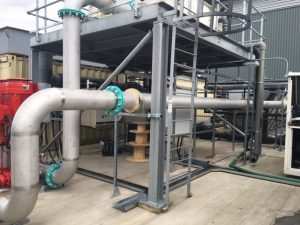
Leaks in cooling pipework can disrupt operations, damage equipment, and pose serious safety risks, especially if hazardous coolants are involved.
Preventing leaks begins with selecting appropriate joints and fittings, such as welded, flanged, or press-fit connections, depending on the application and pipe material.
Joints should be positioned thoughtfully to reduce mechanical stress and avoid areas prone to vibration or temperature fluctuations.
Pressure testing after installation is essential to ensure joint integrity, and incorporating expansion joints or flexible couplings can further reduce the risk of cracking or leaks caused by thermal movement.
Safety and Compliance
Pipework systems for process cooling must comply with a range of UK safety regulations, including the Pressure Systems Safety Regulations (PSSR) and relevant British Standards.
Compliance not only reduces legal liability but also ensures systems are built to minimise the risk of failure or injury.
Designers must consider safety features such as pressure relief valves, clear labelling, and isolation points to allow for emergency shut-off and maintenance.
Additionally, a thorough risk assessment should be conducted during the design phase to identify potential hazards and address them proactively through design adjustments.
Commissioning and Testing
Before a cooling system can be considered operational, it must undergo rigorous commissioning and testing.
This includes pressure testing to check for leaks, flow rate verification, and thermal performance assessments to ensure the system meets specified requirements. Any anomalies should be addressed before full operation begins.
Once the system is live, it’s important to establish a routine maintenance schedule that includes checks for insulation condition, joint integrity, and flow performance.
By identifying issues early, you can prevent more serious failures and maintain consistent cooling efficiency across the system’s lifespan.
Conclusion
Designing pipework for process cooling demands careful planning and technical expertise.
From choosing the right materials and sizing the pipes correctly to ensuring proper layout, insulation, and safety features, each element plays a vital role in the performance and reliability of the cooling system.
By focusing on these key considerations, businesses can reduce energy costs, enhance system longevity, and stay compliant with UK regulations.
For best results, it’s advisable to consult with experienced pipework professionals who can tailor solutions to your specific operational requirements.