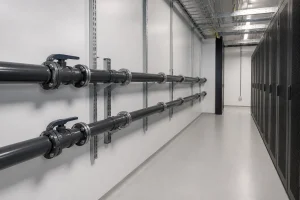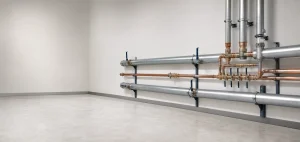
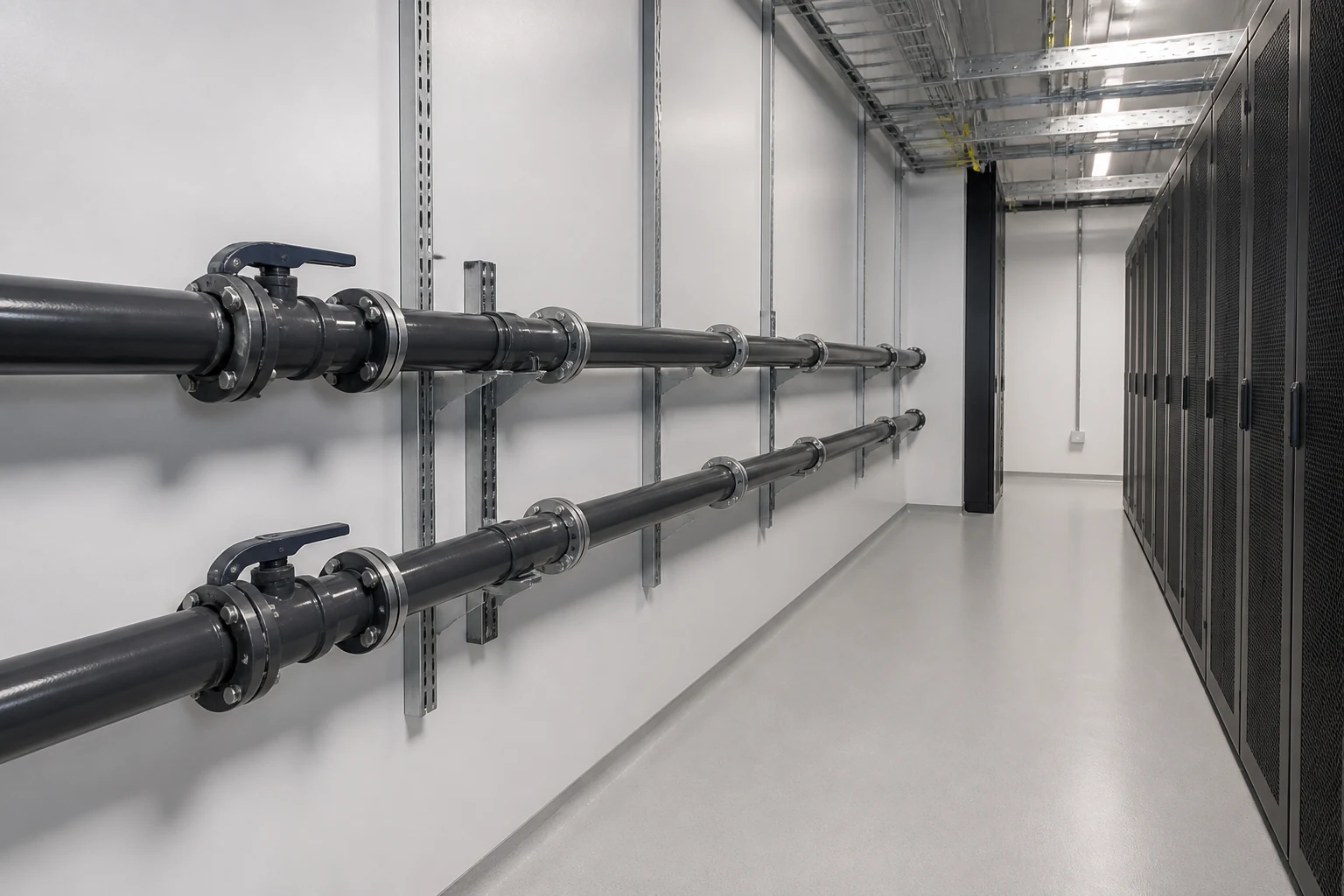
Rack cooling depends on more than the cooling unit itself. The way chilled water or cooling fluid reaches each circuit, moves through the room and returns to the system has a direct effect on temperature stability at the equipment.
Good flow and return pipework helps cooling plant do its job evenly. It supports predictable temperatures, reliable circulation, clear isolation points and a layout that engineers can inspect, adjust and expand with confidence.
Why flow and return routes matter
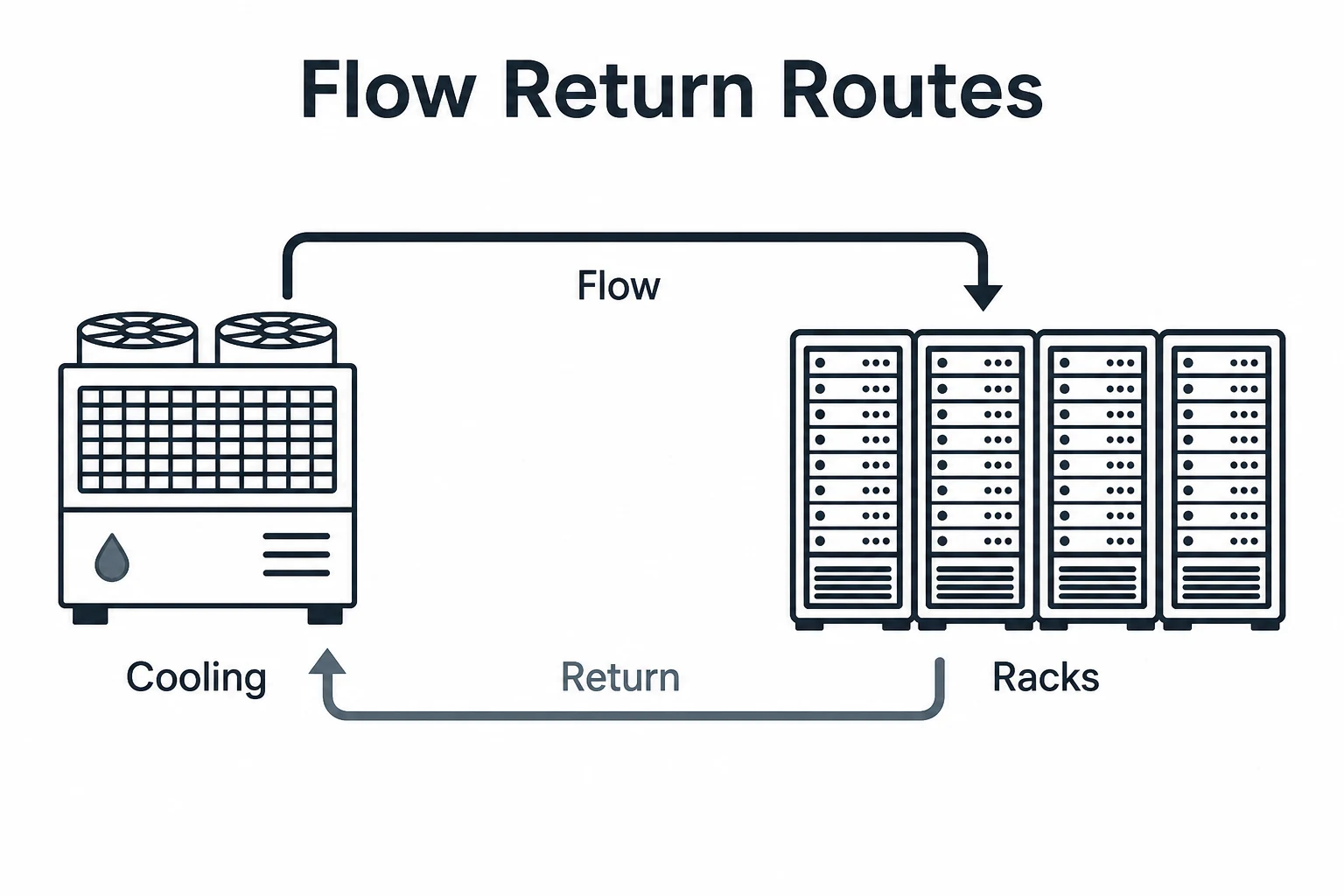
In a data room cooling system, the flow pipework carries cooled water or fluid towards the cooling units, coils or manifolds. The return pipework carries the warmer fluid back after it has absorbed heat from the room. That simple movement is central to rack cooling performance.
If the pipework route is clear, balanced and correctly sized, each connected unit has a better chance of receiving the flow it needs. If the route is awkward, restricted or uneven, some parts of the system can be favoured while others receive less effective circulation. The result may be uneven cooling across racks, unstable return temperatures or cooling equipment working harder than it should.
This is why flow and return pipework should be considered as part of the cooling design, not just as a way to connect plant to equipment. The pipe route, branch positions, valve locations, jointing method and access strategy all influence how well the system behaves once it is under load.
For businesses planning or improving data room cooling pipework, the aim is not only to get fluid from one point to another. It is to create a pipework arrangement that supports stable rack conditions and remains practical to operate over time.
Balancing supply across racks and cooling units
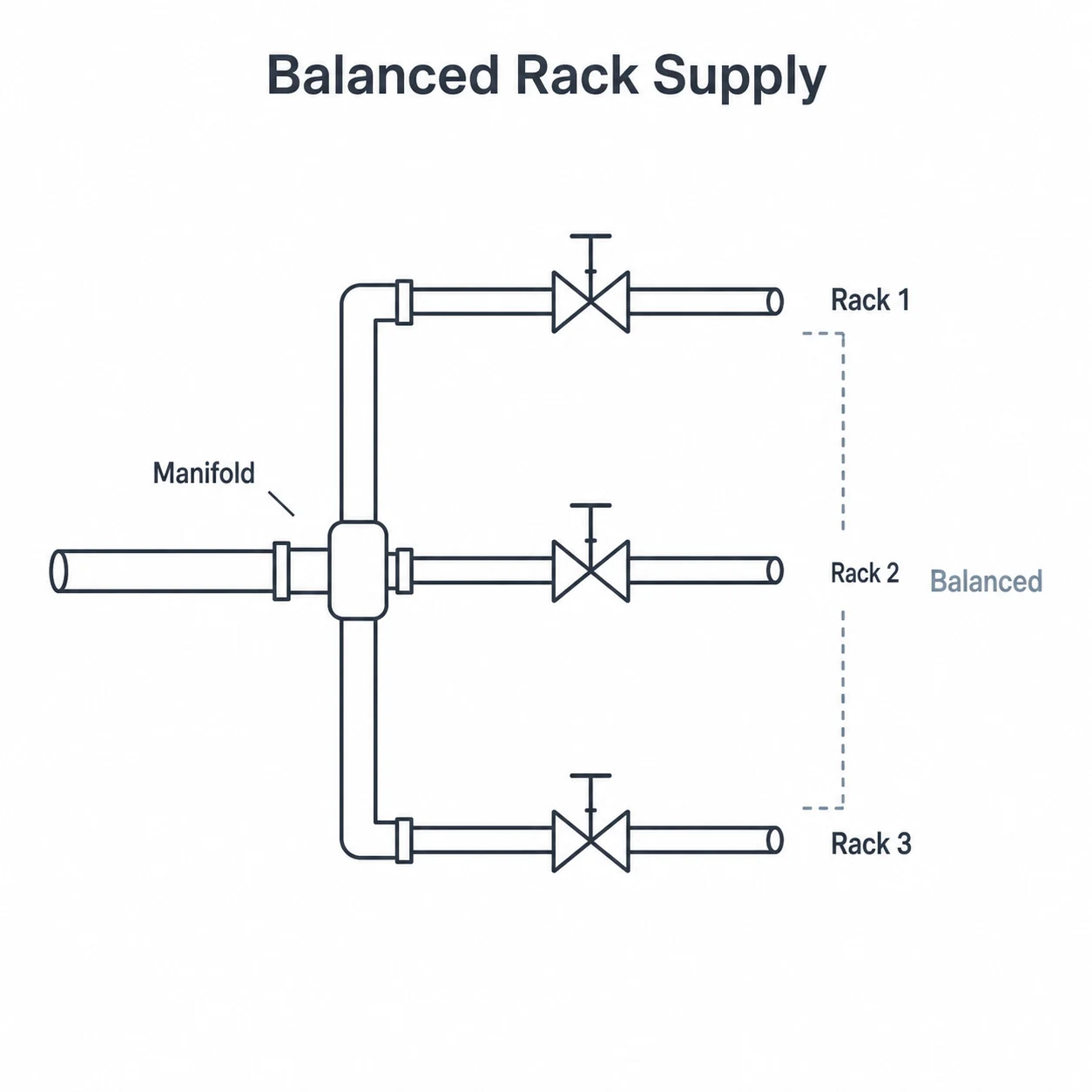
Rack cooling is most stable when the cooling units serving the space receive consistent flow. When flow is poorly balanced, equipment nearest the main supply may receive more favourable conditions while units further along the circuit can be less effective. In practice, that can make room conditions harder to control.
Correct pipe sizing helps avoid unnecessary pressure drop. Pipework that is too restrictive can limit available flow, especially when several branches are calling for cooling at the same time. Oversized or poorly planned routes can also create control issues if velocities and circuit resistance are not properly considered.
Branch design matters too. A neat main run with logical take offs makes the system easier to understand and commission. Flow and return branches should be arranged so that each connected cooling unit can be balanced, isolated and checked without confusion. In larger rooms, manifolds can help distribute flow cleanly, provided they are installed with suitable valves, gauges and access.
Balanced pipework also supports better control from cooling units and pumps. When the hydraulic side of the system is predictable, control valves and sensors can respond more consistently. That does not remove the need for good controls, but it gives those controls a stronger mechanical foundation.
Keeping return temperatures useful
The return side of the pipework tells the system what heat has been collected from the room. If return pipework is poorly arranged, mixed in an unhelpful way or affected by unwanted heat gain, the system can become harder to interpret and control.
A clean return route helps maintain a clear difference between flow and return temperatures. That temperature difference is important because it shows whether the cooling circuit is carrying heat away effectively. When the return temperature is unstable or misleading, cooling equipment may respond in ways that do not match the true demand at the racks.
Pipe insulation, separation from heat sources and sensible routing all help protect the condition of the flow and return circuits. Even small details can matter in technical areas. For example, cramped pipework that traps heat around sensitive components can work against the wider cooling strategy.
Good return pipework is also easier to monitor. Engineers can identify where heat is being picked up, compare circuit performance and make informed adjustments. That turns the pipework from a hidden background service into a useful part of the cooling system.
Valve access, isolation and future adjustments
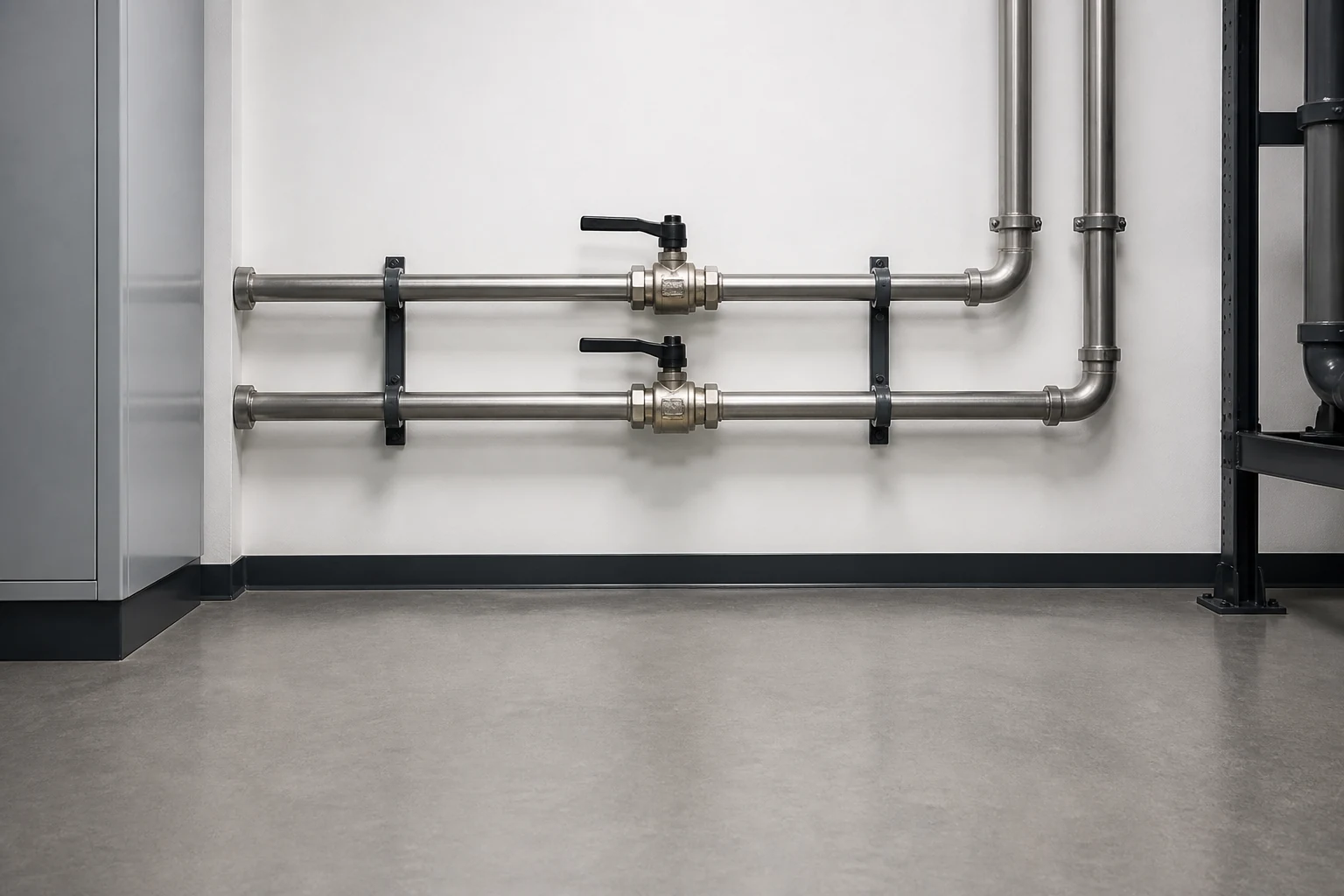
Flow and return pipework should be designed with practical access in mind. Valves, strainers, unions, drains, vents and test points need to be reachable. If they are hidden above congested areas or squeezed behind other services, routine checks become more difficult than they need to be.
Accessible valves are especially important in data room environments because work often needs to be carefully controlled. Engineers may need to isolate one section while keeping other parts of the cooling system available. A well planned valve arrangement makes that process clearer and more controlled.
DSJ Pipework has covered this subject in more detail in its guide to why valve access matters in data room cooling pipework. The same principle applies directly to flow and return design. If a circuit cannot be safely isolated, vented, drained or checked, it becomes harder to manage during changes or fault finding.
Future capacity should also be considered. Data rooms can change as rack loads, equipment layouts and cooling demands develop. Pipework does not have to be overcomplicated, but a logical route with clear isolation points and sensible spare capacity can make later alterations more straightforward.
Jointing methods and installation quality
The way pipework is joined affects both reliability and practicality. Press fit pipework can be a strong option for many commercial and industrial cooling installations because it gives clean, repeatable joints when specified and installed correctly. Welded sections may be needed where the pipe material, pressure, temperature or site requirements call for them. Solvent welding may also be relevant on suitable plastic pipework systems.
The right method depends on the design, the fluid, the pipe material and the operating conditions. What matters is that the jointing approach is selected for the system rather than chosen out of habit. Each joint should support the performance needs of the cooling circuit and the standards expected in a technical environment.
Installation quality is visible in the finished system, but it is also proven by what happens when the system is filled, tested, commissioned and put into use. Clean pipe runs, secure supports, correct falls where required, labelled valves and tidy transitions between materials all help engineers understand and trust the system.
For related pipework applications beyond data rooms, the same thinking applies to process cooling systems, where reliable flow, controlled return paths and maintainable pipework layouts are essential to stable operation.
How pipework design supports cooling resilience
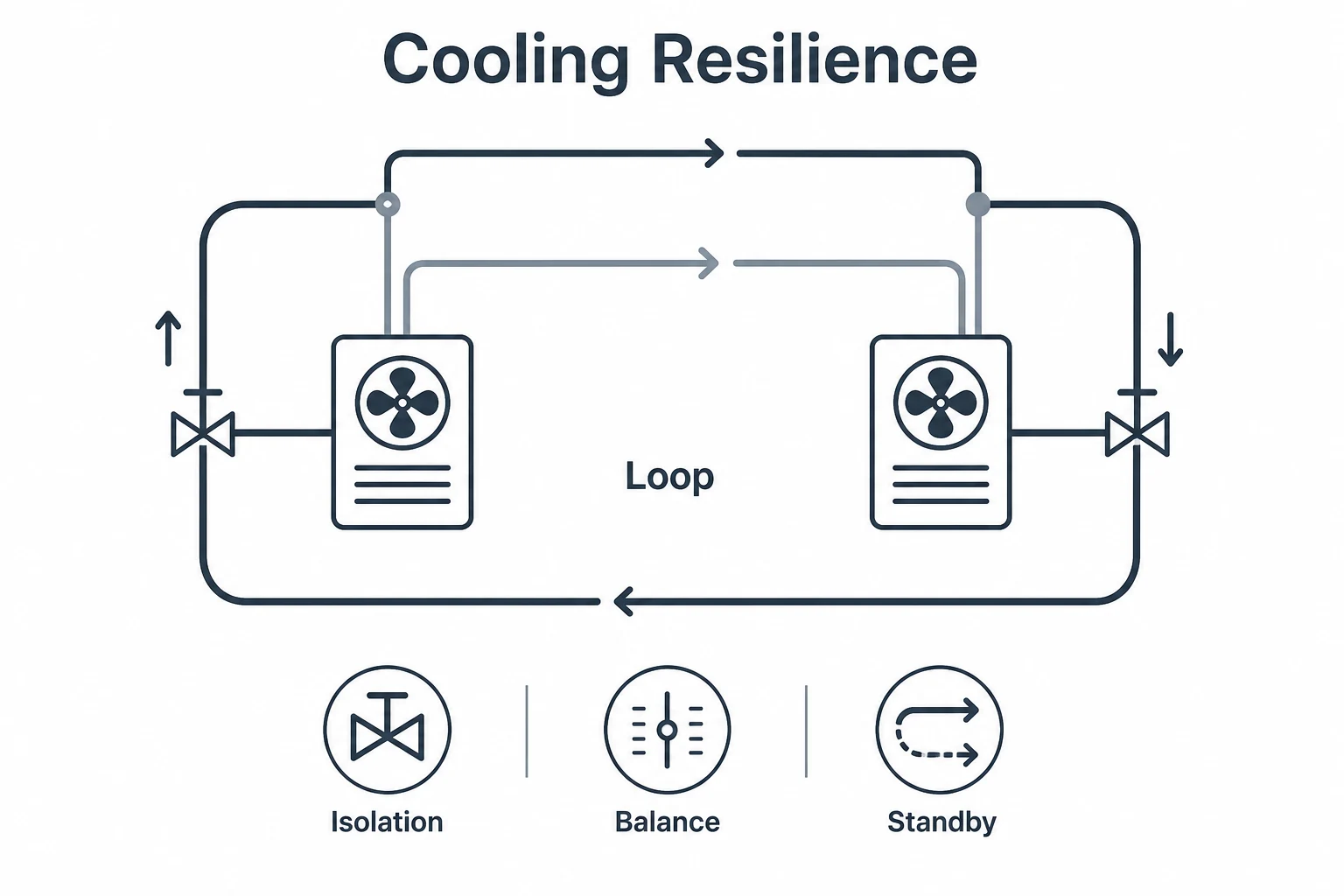
Stable rack cooling is built from many connected decisions. Cooling units, controls, airflow management and maintenance all play a role, but the pipework is what allows the cooling medium to reach the right places at the right time.
A resilient layout avoids unnecessary complexity. It gives each circuit a clear purpose, keeps valves accessible and reduces avoidable restrictions. It also allows engineers to inspect the system without guesswork. When pipework is easy to follow, it is easier to commission, balance and verify.
Good pipework design can also support energy efficiency. When flow is balanced and return conditions are clear, pumps and cooling plant can operate with fewer avoidable corrections. That does not mean pipework alone controls energy use, but it can remove common causes of unnecessary strain.
Ongoing care still matters. Checks on valves, insulation, supports, leaks and circuit performance help preserve the quality of the original installation. DSJ Pipework’s guidance on maintaining data room cooling systems is a useful companion to the design considerations covered here.
- Flow and return pipework affects how consistently cooling reaches racks and cooling units.
- Balanced circuits help avoid uneven cooling and make system controls easier to manage.
- Clear return routes make temperature behaviour easier to monitor and understand.
- Accessible valves, drains, vents and test points support controlled isolation and adjustment.
- Installation quality, including correct jointing and tidy routing, is central to reliable cooling performance.
Frequently asked questions
What is flow and return pipework in rack cooling?
Flow pipework carries cooled water or fluid to the cooling equipment. Return pipework carries the warmer fluid back after heat has been collected from the data room environment.
Can poor pipework routing affect rack temperatures?
Yes. Restrictive routes, unbalanced branches or awkward valve positions can make cooling less consistent across connected units, which may affect temperature stability around racks.
Why is valve access important on flow and return circuits?
Valve access allows engineers to isolate, balance, drain, vent and inspect sections of the system more easily. This supports controlled work and clearer fault finding.
Does pipework design replace regular cooling system checks?
No. Good design creates a strong foundation, but regular checks help keep valves, insulation, supports, joints and circuit performance in the right condition.
Planning data room cooling pipework?
DSJ Pipework can help with practical, well planned flow and return pipework for commercial and industrial cooling environments.