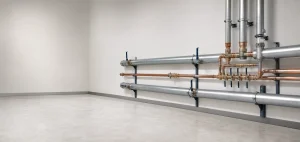

A pressure test is only as useful as the record that proves what was tested, how it was tested and who accepted the result.
For buyers, facilities teams and project managers, good documentation supports compliance, commissioning, maintenance and future modifications. Here is what to expect from a professional industrial pipework pressure test record.
Why pressure test records matter
Pressure testing pipework is not just a site activity at the end of an installation. It is part of the evidence trail for a safe, controlled and properly commissioned system. The record should make it clear that the correct section of pipework was isolated, tested and inspected before being put into service.
In a commercial or industrial setting, this matters because pipework may serve heating circuits, process cooling systems, compressed services, manifolds, plant room headers or data-room cooling infrastructure. If an issue appears later, the handover pack should help the team trace the tested section and understand what was accepted at commissioning.
For context on industrial installation standards and typical service environments, see DSJ Pipework’s industrial pipework installation service page.
Core information every test record should show
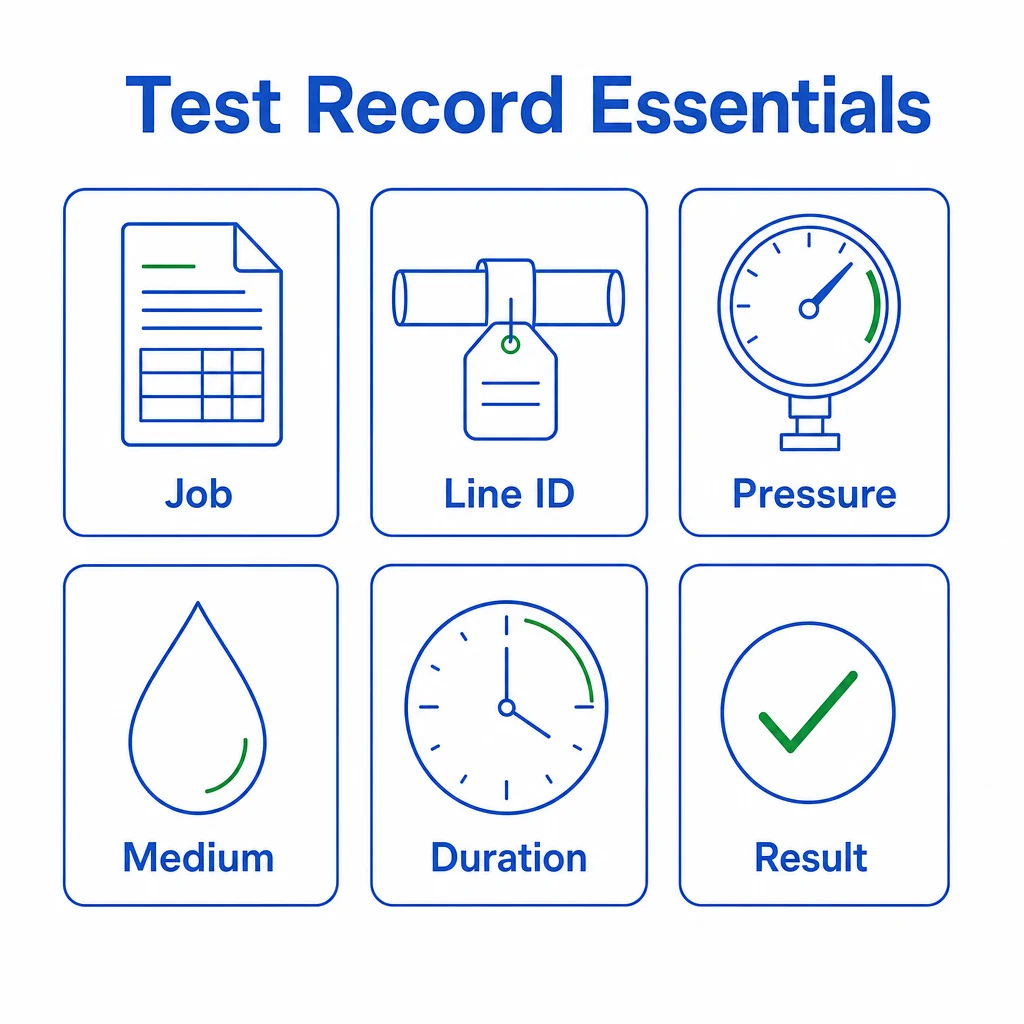
A pressure test certificate should identify the pipework clearly enough that another competent person can understand the scope without relying on memory. The best records are specific, legible and tied back to drawings or asset references.
- Project name, client reference and test location or system area.
- Line number, drawing reference, spool reference or asset tag where available.
- Pipe material, size range, jointing method and service, such as heating, cooling or process pipework.
- Test method, such as hydraulic or pneumatic, and the test medium used.
- Test pressure, hold period and acceptance criteria, even where these are set out elsewhere.
- Start and finish readings, with comments on any pressure movement or visual inspection findings.
- Date, time and environmental notes where relevant, especially for temperature-sensitive results.
The record should also state whether the test passed, failed or required remedial work before retesting. Ambiguous wording such as “checked” or “seems fine” is not enough for a professional handover.
Calibration, equipment and traceability

Reliable pressure testing pipework records should identify the equipment used to take the reading. This normally includes the pressure gauge or recorder reference, range, serial number and calibration status. The purpose is simple: the result should be traceable to a measuring instrument that was suitable for the test.
Traceability should also extend to the installation itself. Depending on the project, supporting records may include weld maps, welder qualifications, welding procedure references, material certificates, press-fit manufacturer requirements, solvent welding details, valve schedules and marked-up drawings. Not every job needs the same level of paperwork, but the record should match the risk, specification and complexity of the system.
This is particularly important in technical environments such as data room cooling pipework, where future maintenance teams need to understand which valves, branches and manifolds were included in the pressure test.
Regulatory and specification references
Pressure testing pipework regulations are not a single checklist that applies identically to every installation. The applicable requirements can depend on the system, pressure, fluid, working conditions, design specification, insurance requirements and client standards. In some cases, the Pressure Systems Safety Regulations and a written scheme of examination may be relevant. Other health and safety duties, risk assessments, permits and site procedures may also apply.
A good test record should therefore state the procedure, specification or standard followed, rather than simply saying that a test was completed. It should also show that safety controls were in place, such as isolation, venting, exclusion zones, controlled filling, depressurisation and safe disposal of test water where applicable.
For heating circuits, records should sit alongside wider commissioning and balancing information. DSJ’s heating pipework service page gives further context on the types of systems where this documentation can be important.
Sign-off, defects and retesting
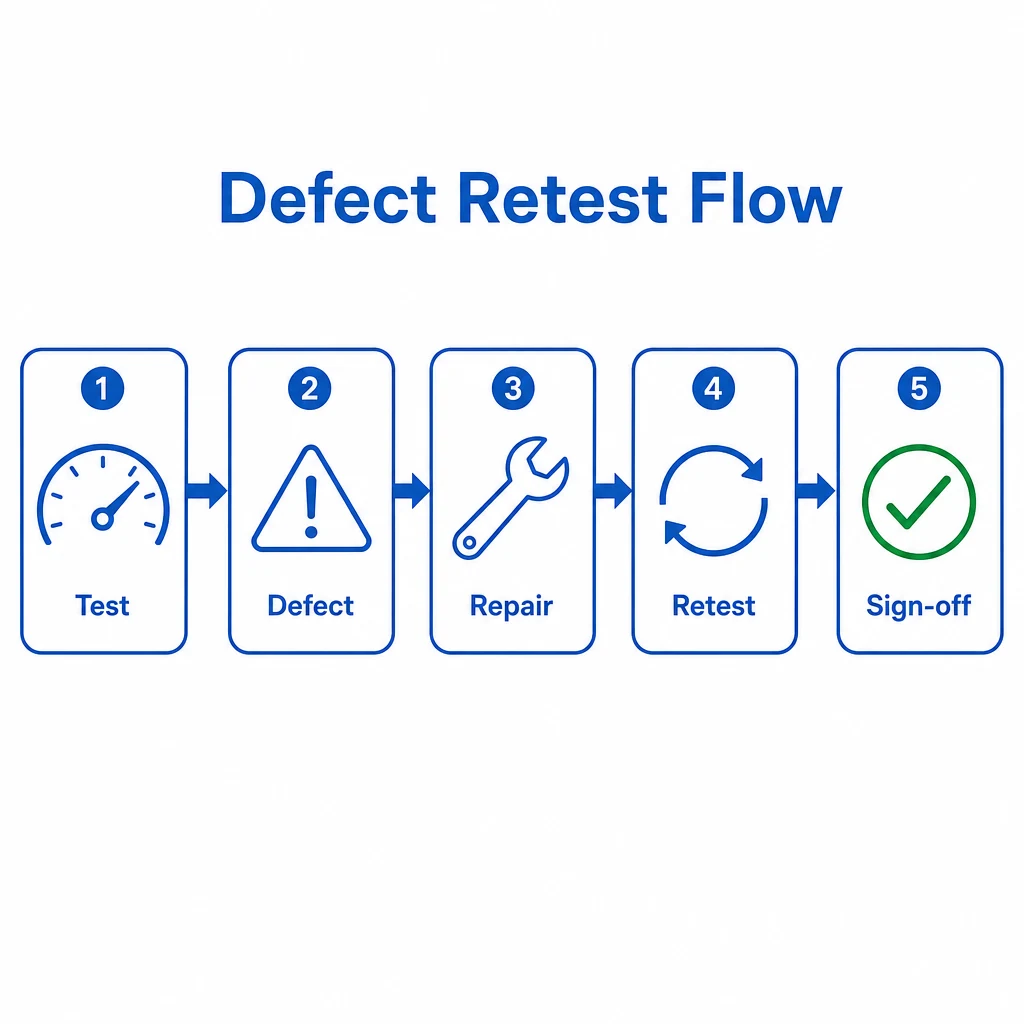
Professional pressure test documentation should include named sign-off. This may involve the pipework contractor, client representative, principal contractor, commissioning engineer or an appointed competent person, depending on the project structure. The record should include names, roles, signatures and dates, not just initials.
If a leak, pressure loss or defect is found, the paperwork should not hide it. It should record the issue, the action taken and whether the affected section was retested. This creates a clean audit trail and avoids uncertainty when the system is handed over.
Where a project includes multiple tested sections, each certificate should be numbered and linked to the correct drawing or marked-up isometric. That prevents confusion between plant room headers, service routes, branches, valves and final connections.
What a good handover pack looks like

At handover, pressure test records should be easy to find, not buried in unrelated paperwork. A useful pack may include test certificates, marked-up drawings, calibration certificates, relevant inspection records, commissioning notes, valve schedules and any agreed exclusions.
Buyers should ask for records in a format that can be stored, searched and passed to future maintenance teams. Clear documentation is valuable long after the installation team has left site, particularly when extensions, plant upgrades or fault investigations are required.
You can find more practical pipework guidance on the DSJ Pipework blog, and examples of project environments in the case studies section.
- A pressure test record should prove the exact pipework section tested, the method used and the result accepted.
- Gauge calibration, drawing references and asset details are essential for traceability.
- Records should reference the relevant procedure, specification or regulatory context.
- Defects and retests should be documented clearly, not left as informal site notes.
- A good handover pack supports safe commissioning, maintenance and future modifications.
Frequently asked questions
Who should sign a pipework pressure test certificate?
It should be signed by the contractor completing the test and, where required, the client representative, commissioning lead, principal contractor or competent person appointed for the system.
Do all pressure tests need the same paperwork?
No. The level of documentation should reflect the system, risk, specification and applicable regulations. Industrial and commercial systems usually need clearer traceability than simple informal checks.
Should calibration certificates be included?
Yes, where pressure readings are used for acceptance, the gauge or recorder should be identifiable and its calibration status should be available.
What happens if a pressure test fails?
The defect should be recorded, corrected and retested. The final handover should show the failed result, remedial action and successful retest where applicable.
Need support with industrial pipework documentation?
DSJ Pipework can help with professional installation, testing and clear handover records for commercial and industrial pipework projects.