Reliable process cooling is not only about the chiller, cooling tower, dry cooler or heat exchanger. The pipework that carries cooling water around an industrial system has a direct effect on temperature control, equipment protection and day to day production stability.
When cooling water pipework is designed, installed and maintained properly, it helps remove heat consistently, reduce avoidable strain on plant and give operators a system they can inspect, isolate and control with confidence.
Why cooling water pipework matters to process reliability
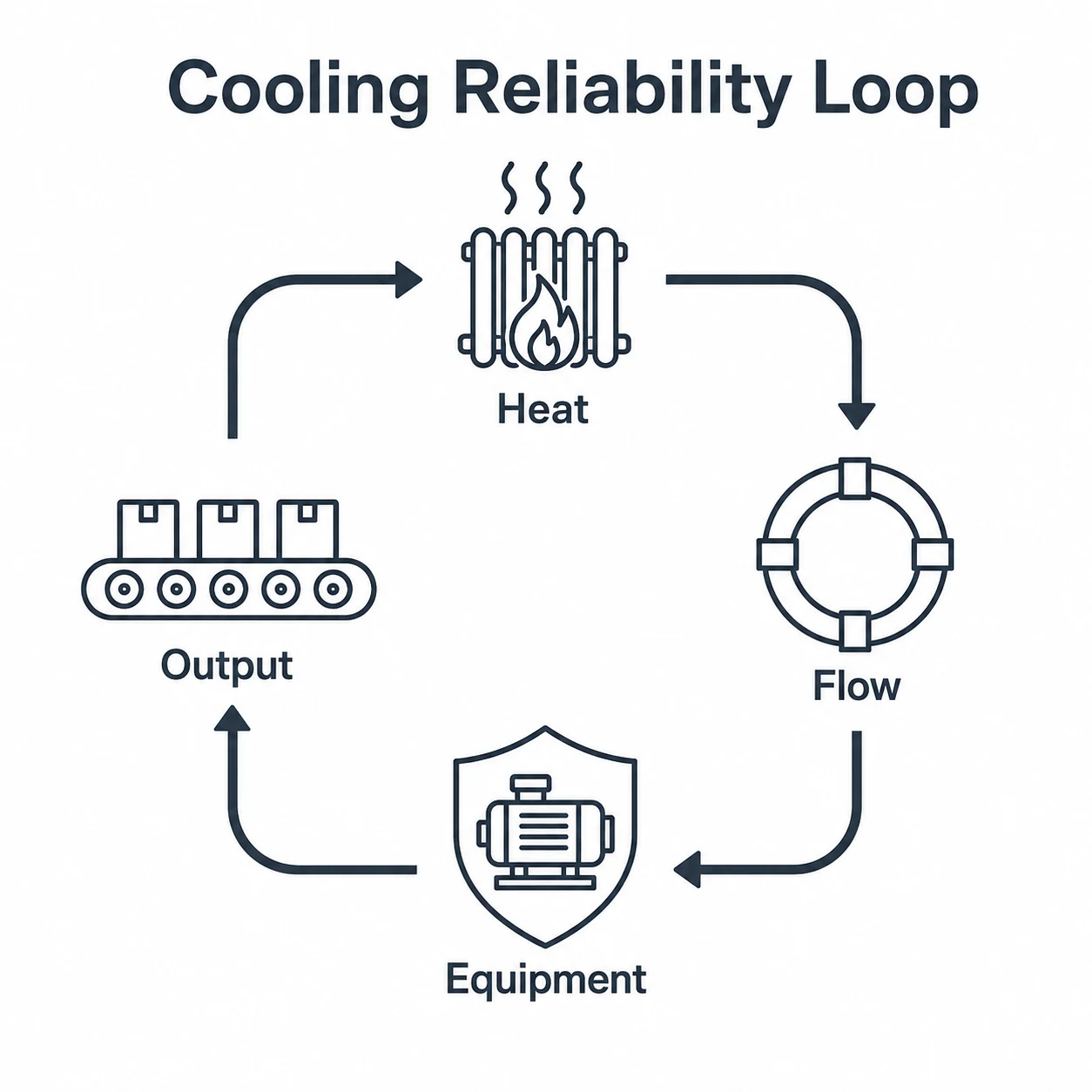
Many industrial processes create heat as part of normal operation. Machinery, tooling, compressors, hydraulic systems, moulding equipment, production lines and specialist plant may all need a steady cooling water supply to stay within their intended operating range. If heat is not removed at the right rate, the process can become unstable.
Cooling water pipework is the route that connects heat generating equipment to the cooling source. Its job sounds simple, but its performance depends on a careful balance of flow, pressure, temperature, material choice and control. A well planned system allows cooling water to reach the right parts of the process at the right time, then return efficiently for heat rejection or further conditioning.
Problems often appear when pipework has been treated as a secondary detail. Undersized pipe runs, poor routing, unnecessary restrictions, weak support, inaccessible valves or unsuitable materials can all make a cooling system harder to operate. The result may be inconsistent cooling, nuisance alarms, local hot spots, premature component wear or difficult maintenance.
For businesses reviewing existing plant or planning new works, DSJ Pipework provides process cooling systems support that considers the pipework as part of the wider mechanical installation, not as an isolated set of pipes.
Flow and temperature control are the starting point
Cooling water pipework has to support the required flow rate for each part of the process. Too little flow can leave equipment unable to reject heat. Too much flow in the wrong area can create noise, erosion, poor balancing or wasted pumping energy. The best systems are planned around what the process actually needs, with pipe sizes, routes and valves selected to help achieve stable circulation.
Temperature control depends on more than the cooling unit set point. The pipework layout affects how quickly cooled water reaches the load, how evenly it is distributed and how much heat is gained or lost along the route. Long pipe runs, poorly insulated sections and awkward routes can make control less predictable. In critical applications, even small variations can affect process quality or cause equipment to work harder than necessary.
Balancing is especially important where several machines or circuits share one cooling source. Without proper balancing, water may take the easiest route, leaving other parts of the process short of cooling. Clear valve positions, accessible commissioning points and sensible manifold arrangements make it easier to set up the system and revisit it later if production demands change.
A useful cooling water installation should also make readings easy to take. Temperature gauges, pressure gauges, test points, drain points and vents all help engineers understand what is happening inside the system. Good pipework design gives maintenance teams practical information, which helps them respond early instead of waiting for a failure to become obvious.
Material choice and jointing methods affect durability
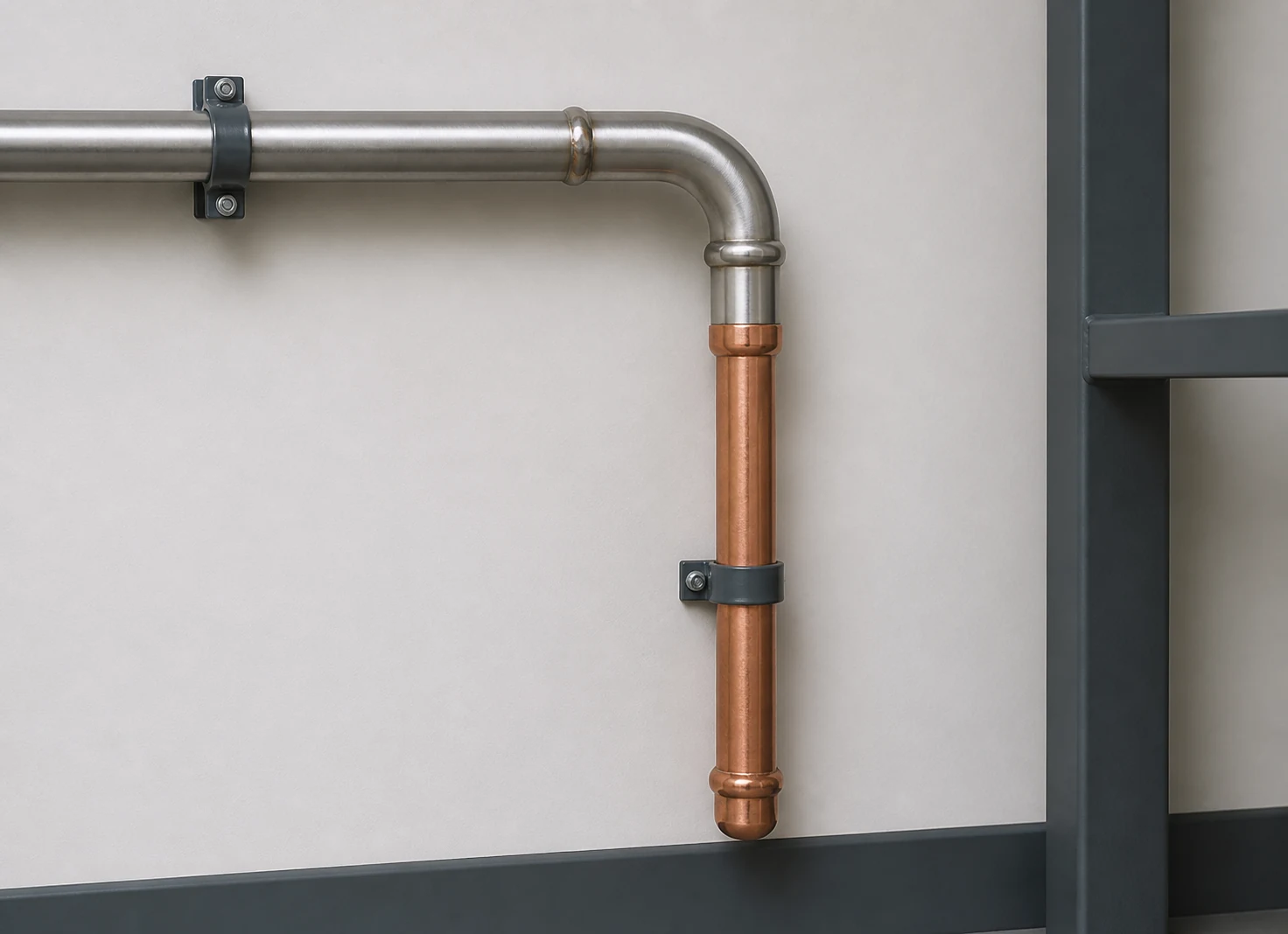
Cooling water pipework may be installed in steel, copper, plastic or specialist materials depending on the temperature, pressure, fluid type, environment and process requirements. There is no single best material for every system. The right choice depends on the conditions the pipework will face and how the installation needs to be maintained over time.
Steel pipework is often chosen for robust industrial plant areas where strength and durability are important. Copper may be suitable for certain commercial and technical systems where neat installation, compatibility and corrosion considerations allow it. Plastic pipework and solvent welded systems may be used where the fluid and operating conditions make them appropriate. Material compatibility matters because cooling circuits can include additives, glycol mixes, treated water or process related contaminants.
Jointing method is just as important as pipe material. Welded sections can provide strong, permanent joints for demanding installations. Press fit pipework can be a practical option where speed, cleanliness and controlled installation are valuable. Solvent welding has its own correct preparation and curing requirements. Each method needs skilled handling, suitable equipment and attention to manufacturer guidance.
The aim is not simply to create a leak free installation on day one. The pipework should remain dependable through vibration, temperature changes, plant operation, maintenance access and future inspection. That is why experienced pipework contractors look closely at supports, expansion allowance, isolation points and the working environment before deciding how each section should be built.
Good layout helps operators maintain control
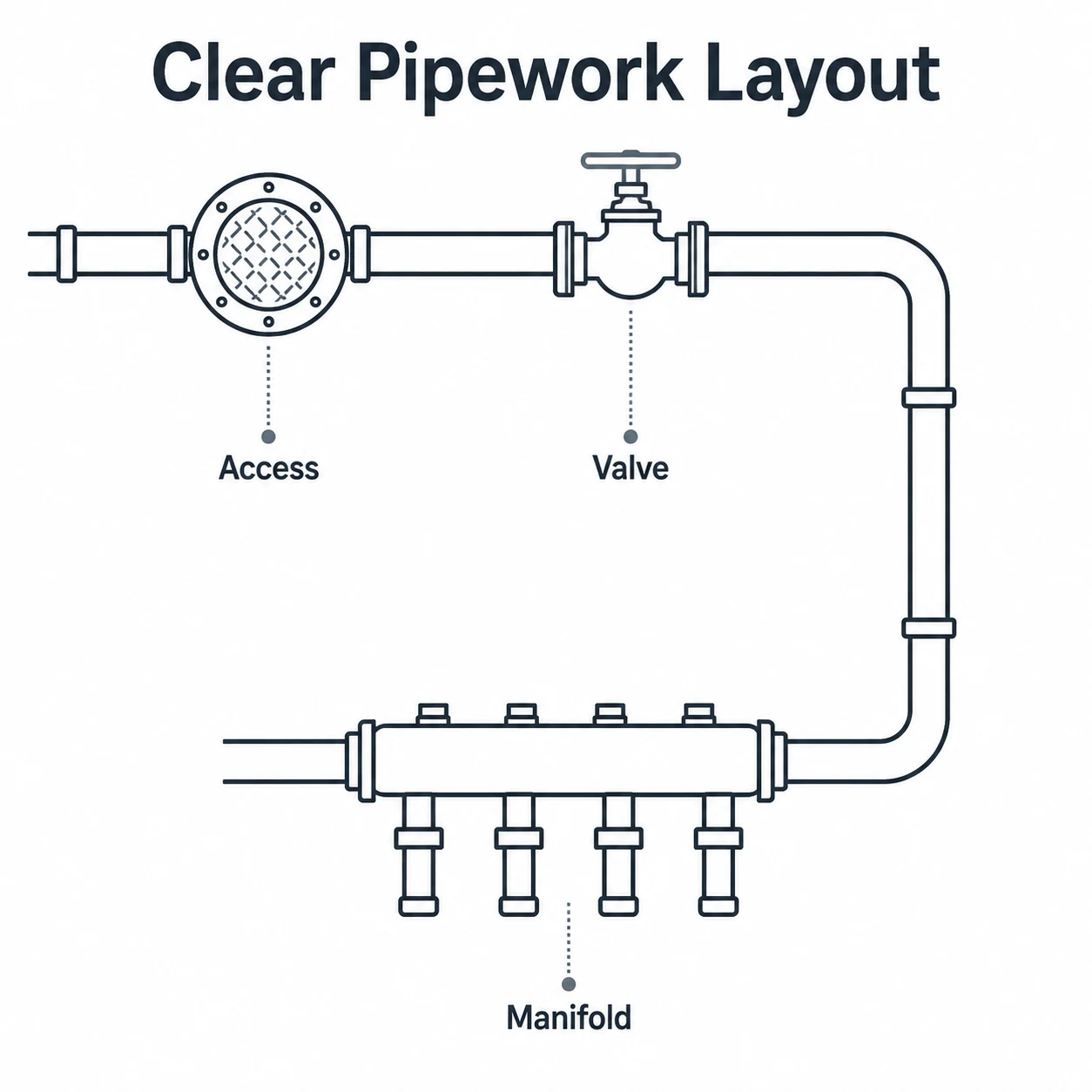
A cooling water pipeline installation should be logical to follow. In a plant room, factory service area or technical space, engineers need to understand what each pipe serves, where it can be isolated and how it can be drained or vented. Confusing layouts slow down fault finding and can make routine maintenance more difficult.
Clean pipe runs are not only about appearance. Straightforward routing can reduce pressure losses, minimise trapped air, simplify support and make future modifications easier. Where bends, valves and branches are needed, they should be placed with access in mind. A valve that cannot be reached safely is far less useful when the system needs attention.
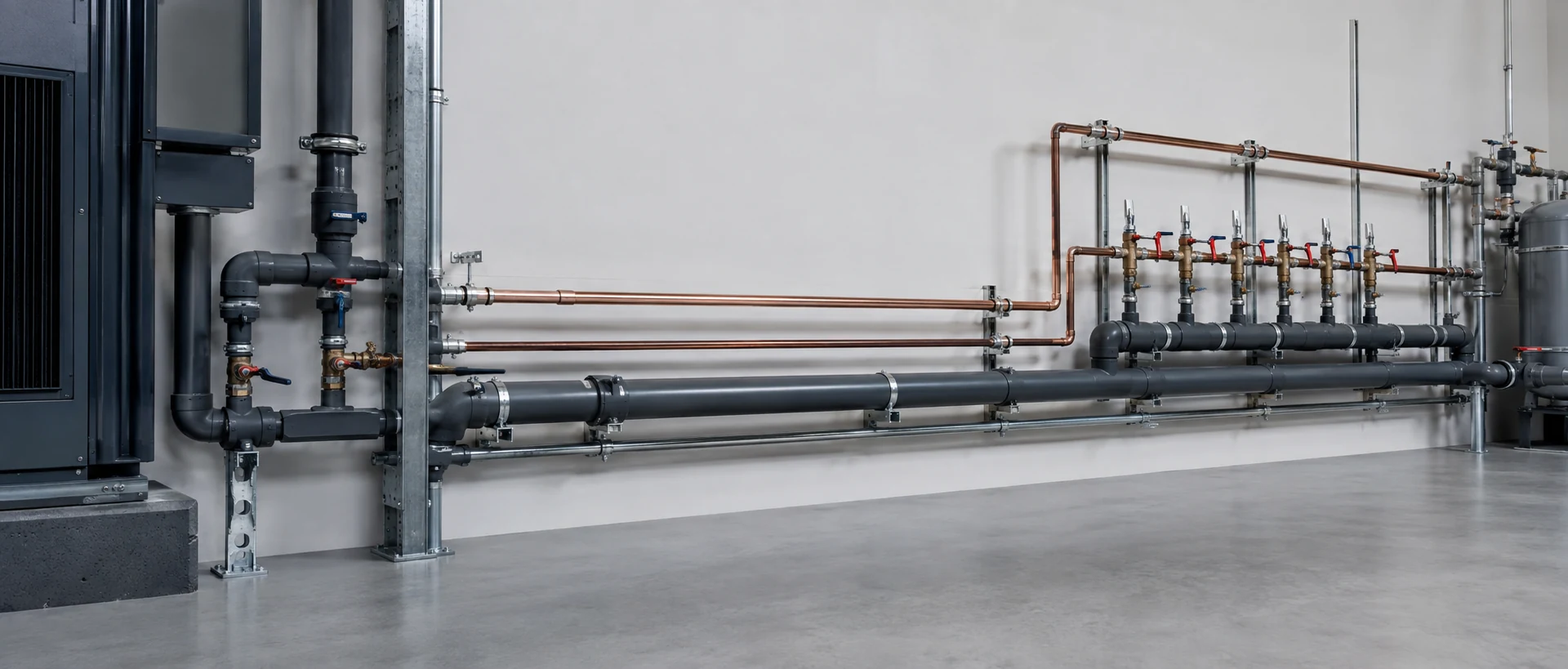
Manifolds can play a valuable role in process cooling pipework because they allow multiple circuits to be controlled from a central point. A well arranged manifold can help with isolation, balancing and staged maintenance. It can also make expansion easier if extra process loads are expected later.
There is more on practical planning in pipework design for process cooling, including the way efficiency and safety need to be considered together. The strongest designs tend to be the ones that make normal operation simple, while still allowing engineers to work safely when inspection or repair is needed.
Pipework quality reduces avoidable heat management issues
Many cooling problems are not caused by a complete failure of the cooling source. They come from smaller issues that build up over time. Air trapped in the pipework can restrict circulation. Strainers can become blocked. Valves can be left partly closed. Supports can loosen. Insulation can become damaged. A small leak can gradually reduce system pressure or introduce air into the circuit.
Well installed pipework reduces the chance of these problems and makes them easier to spot. Correct falls, high level vents, low level drains, suitable strainers and accessible isolation valves all support reliable operation. So does clear separation between flow and return pipework, sensible labelling and enough space around serviceable components.
Pressure testing and commissioning also matter. Testing helps confirm the integrity of the installation before it is brought into service. Commissioning helps check that water is moving through the system as intended, that circuits are balanced and that control devices are working correctly. These stages should not be treated as box ticking because they often reveal issues that are easier to resolve before production depends on the system.
For existing installations, symptoms such as uneven cooling, pump noise, frequent topping up, unexplained temperature drift or repeated alarms should be investigated rather than tolerated. DSJ Pipework also covers practical fault themes in troubleshooting common pipework problems, which is useful when a system is operating but not performing as it should.
Data rooms and technical spaces need the same disciplined approach
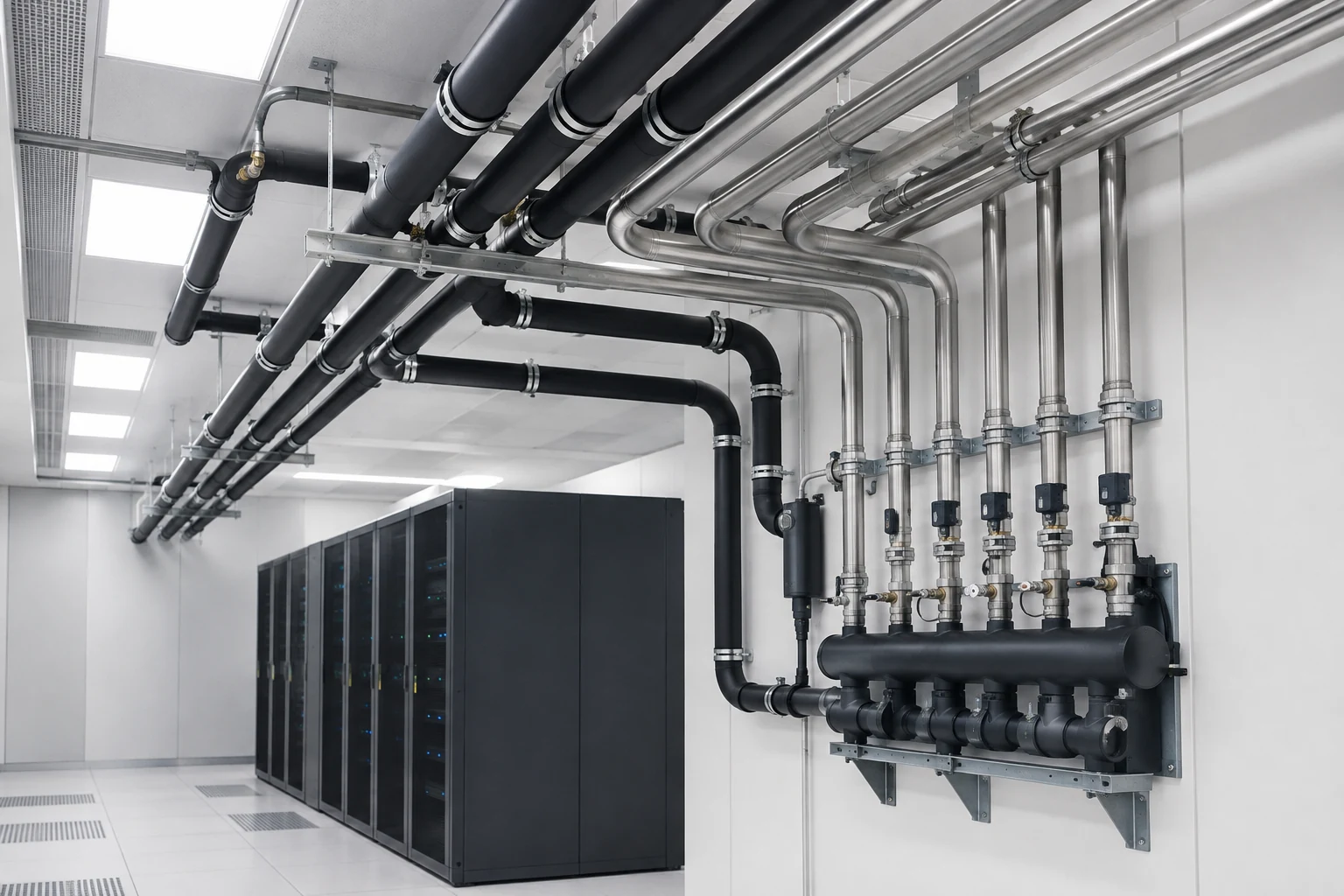
Although industrial process cooling and data room cooling often serve different equipment, they share an important principle. Heat must be removed consistently, and the pipework must support that duty without creating unnecessary risk around sensitive assets.
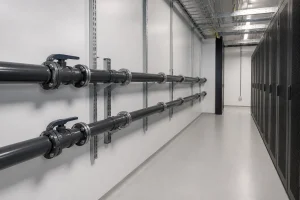
In technical spaces, pipe routes, isolation, leak management, access and control become especially important. Cooling pipework may need to serve close control units, chilled water circuits or dedicated heat rejection equipment. The installation should support routine maintenance without creating avoidable disruption to the space it protects.
Good practice includes carefully planned routes, accessible valves, secure supports and materials suited to the environment. Where press fit, welded or solvent welded methods are used, the work should be completed by engineers who understand both the jointing method and the operational importance of the system.
For readers responsible for server rooms or technical cooling areas, DSJ Pipework has further guidance on maintaining data room cooling systems. The same core message applies to process environments too. Cooling reliability is built through thoughtful design, careful installation and regular attention to the details that keep water moving correctly.
- Cooling water pipework is central to process reliability because it controls how heat is removed from equipment and production systems.
- Pipe sizing, routing, balancing, valves and access all affect how stable and serviceable a cooling system will be.
- Material choice and jointing method should match the fluid, pressure, temperature and working environment.
- Good commissioning and routine checks help identify restrictions, trapped air, leaks and control issues before they disrupt operation.
- A practical pipework layout makes inspection, isolation, drainage and future changes easier for site teams.
Frequently asked questions
What is cooling water pipework used for in industrial processes?
Cooling water pipework carries cooled water or a suitable cooling fluid between the cooling source and the equipment that needs heat removed. It supports stable operating temperatures for machinery, tooling, production equipment and technical systems.
Why does pipework design affect process cooling performance?
Design affects flow rate, pressure loss, temperature stability and maintenance access. If the layout is poorly planned, some parts of the process may receive too little cooling, while pumps and controls may have to work harder than needed.
Which materials are used for process cooling pipework?
Common choices can include steel, copper and selected plastic systems, depending on the duty, fluid, pressure, temperature and surrounding environment. The correct material should be chosen around the actual operating conditions rather than habit.
When should cooling water pipework be checked?
It should be checked during planned maintenance and whenever there are signs of poor cooling, pressure loss, leaks, pump noise, trapped air or unexplained temperature changes. Regular inspection helps keep small issues from becoming production problems.
Planning process cooling pipework?
DSJ Pipework can help with practical, reliable cooling water pipework for industrial and commercial systems, from new installation to alterations and maintenance support.